

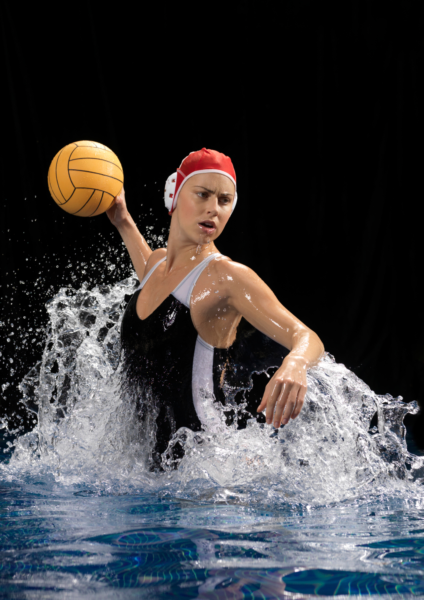
Water polo is one of the fastest-growing sports in the USA. In 1969, at the time of the first NCAA championship, there were only 8 sponsored teams. During the 1990s, the popularity of water polo grew considerably. Universities began to attract world-class talent. Star players such as Tony Azevedo, Anikò Pelle and Balazs Erdelyi came to play, as well as world-renowned coaches like Jovan Vavic (USC), considered one of the best in the world.
The level of competition is incredibly high. This high level of competition and the academic standards of the water polo universities make the recruitment process incredibly competitive.
What does the season look like?
The water polo season begins in September for boys and ends in early December with the NCAA National Championship.
The water polo season begins in late January for girls and ends in mid-May with the NCAA National Championship.
How many universities?
There are around 110 universities offering water polo for girls and over 80 for boys.
What is the scholarship situation?
Men :
- NCAA I : 4.5
- NCAA II : 4.5
Women :
- NCAA I : 8
- NCAA II : 8
The 3 Major Organizations of US College Sports
To study in the United States while continuing an athletic career, students can join an institution affiliated with one of the three major organizations of American college sports:
- NCAA (National Collegiate Athletic Association)
- NAIA (National Association of Intercollegiate Athletics)
- NJCAA (National Junior College Athletic Association)
The NCAA: three divisions and athletic scholarship opportunities
The NCAA is the main organization of American college sports. It has three divisions: NCAA Division I, Division II and Division III. Divisions I and II can offer athletic scholarships, while Division III does not offer scholarships based on athletic ability.
NCAA Division I generally includes the largest and most competitive sports programs. NCAA Division II also offers a strong level of play, often with an appealing balance between academics and athletics.
The NAIA: universities with a personal feel
The NAIA is made up mainly of small, often private, universities. It gives student-athletes a campus environment on a human scale, with valuable proximity to professors and personalized support. NAIA universities can also offer athletic scholarships.
The Junior College (NJCAA): a pathway to a US university
The NJCAA includes institutions that mainly offer two-year programs. A junior college allows student-athletes to continue their studies and their sport in the United States before, if they wish, transferring to an NCAA or NAIA university to complete their degree.
Do you want to study in the United States while continuing your athletic career?
Get your athletic profile evaluated and discover the opportunities available to you.
START MY FREE EVALUATION →
Latest Athlete Commitments
Contacts
Sportif Consulting
Le bourg – 46320 LIVERNON
Lionel CREMERS 

Tel : +33 (0)5.65.40.41.53
Caroline CLAUS
Tel : +33 (0)5.65.40.41.53


